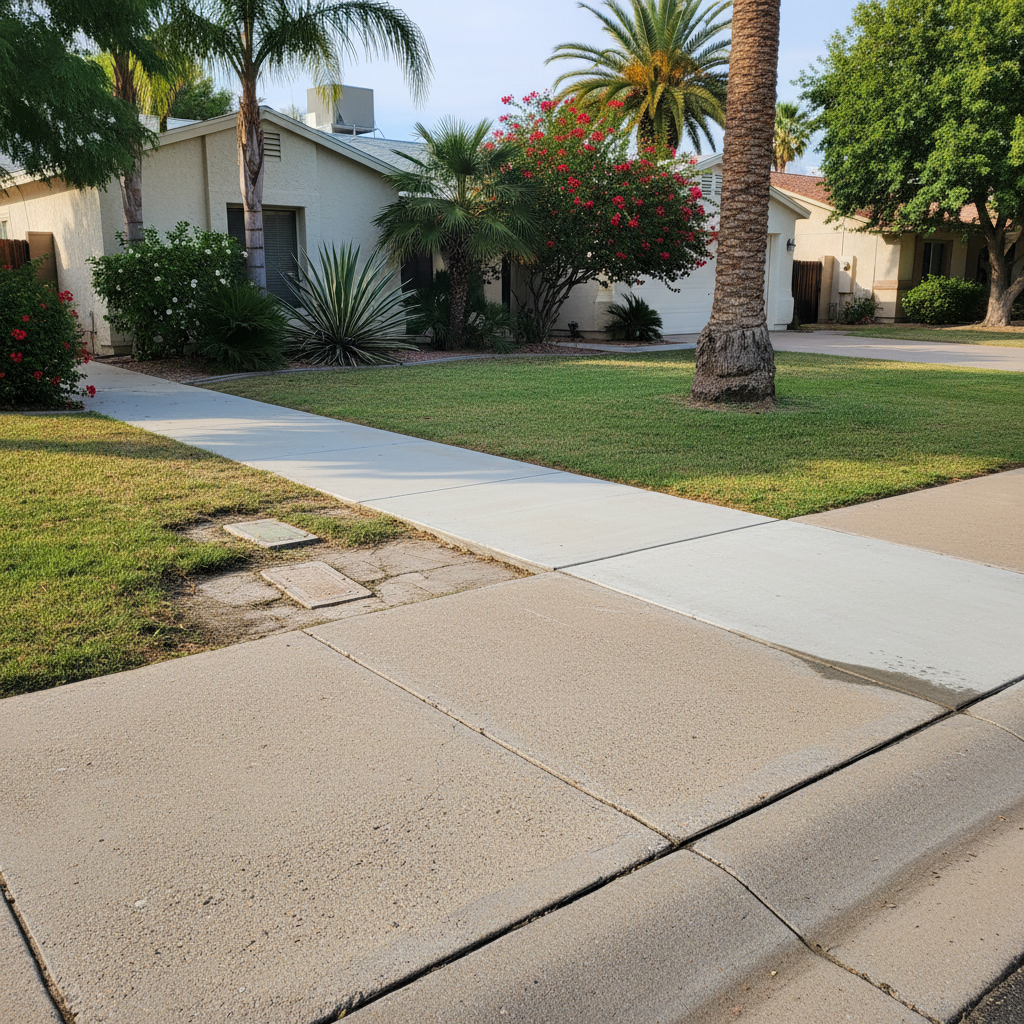
Your concrete sidewalk really takes a beating, especially here in Glendale. Between the scorching summers, those occasional heavy rains, and just plain old foot traffic, it's bound to show some wear and tear. When you start seeing cracks, uneven sections, or crumbling edges, you've got a decision to make, haven't you? Do you fix it up, or do you rip it out and replace the whole thing?
Repairing Your Concrete Sidewalk: The Patchwork Approach
Let's talk repairs first. Sometimes, that's all you need. It's usually quicker, less disruptive, and definitely cheaper upfront. You've got a few common repair methods, depending on the kind of damage you're looking at.
- Crack Filling: For hairline cracks, or even ones that are a little wider, a good quality concrete crack filler can work wonders. It stops water from getting in and making things worse, plus it can really improve the look. It's more of a temporary fix for structural cracks, but it's great for cosmetic ones.
- Patching: Got spalling (that's surface flaking), small potholes, or crumbling edges? You can patch those with a concrete repair mix. You clean out the damaged area, put down a bonding agent, and then fill it in. The trick here is getting the patch to blend, and honestly, it often won't perfectly match the old concrete's color and texture.
- Slabjacking/Mudjacking: This method is for uneven sections where one slab has sunk down. We drill small holes in the sunken slab and pump a slurry — kind of like a concrete mix or polyurethane foam — underneath it to lift it back into place. It's pretty cool to watch, and it can save a perfectly good slab from being replaced just because it settled. This is especially useful in parts of Glendale where we have expansive clay soils that can shift with moisture changes, causing slabs to settle unevenly.
Repairs are fantastic for isolated issues. If you have one or two cracks, or a single sunken slab, it's often the smart move. But here's the kicker: repairs don't address why the damage happened in the first place. If your concrete is old, has widespread problems, or the base wasn't properly prepared initially, those repairs might just be like putting a band-aid on a bigger wound.
Replacing Your Concrete Sidewalk: A Fresh Start
Now, let's look at replacement. This is the more involved option, sure, but it often gives you the best long-term solution. When you replace a sidewalk, you're not just fixing the symptoms; you're getting a whole new, properly installed section.
We start by demolishing the old concrete. That means breaking it up and hauling it away. Then, and this is crucial, we prepare the sub-base. This usually involves compacting the soil, adding a layer of gravel, and making sure drainage is good. A solid sub-base is what prevents future cracking and settling, after all. Then we pour new concrete, making sure to include proper expansion joints and control joints to manage cracking.
When is Replacement the Better Call?
- Extensive Cracking: If your sidewalk looks like a spiderweb, with cracks running everywhere, repairs just won't cut it. You'd only be patching over a fundamentally weak structure.
- Severe Unevenness: While slabjacking can fix some settling, if multiple sections are severely uneven, or if the problem keeps coming back, a full replacement lets us re-grade and prepare the base correctly.
- Crumbling & Deterioration: If the concrete itself is crumbling, spalling extensively, or has large sections missing, its structural integrity is compromised. There's no repairing that back to new, is there?
- Poor Original Installation: Sometimes, the original concrete wasn't installed correctly—maybe the mix was bad, or the base wasn't prepared. In these cases, you'll keep having problems until you replace it properly.
- Aesthetic Upgrade: If you're looking to boost your home's curb appeal, a brand new, smooth sidewalk just looks better than a patched-up one. You can even consider decorative options like exposed aggregate for a fresh look.
Cost is obviously a big factor. Repairs are almost always cheaper upfront. But if you're constantly repairing an old, failing sidewalk, those costs really add up, and you're still left with an unsightly surface. A replacement is a larger investment, but it comes with a fresh warranty and the comfort of knowing you won't be dealing with the same issues for a long, long time.
My Recommendation for Glendale Homeowners
Here's my honest take: if you have minor, isolated damage, try a repair. It's cost-effective and can extend the life of your sidewalk. But if you're seeing widespread cracking, significant settling that keeps coming back, or if your sidewalk is just plain old and falling apart, don't throw good money after bad with endless patches. It's time for a full replacement.
You'll get a stronger, safer, and much better-looking sidewalk that will stand up to our Glendale climate for decades. It's an investment that pays off in curb appeal, safety, and not having to worry about it anymore. Give Kingdom Concrete Glendale a call, and we can come out, take a look at your specific situation, and give you an honest assessment of whether a repair or replacement is right for you. We'll lay out all your options, no pressure at all.