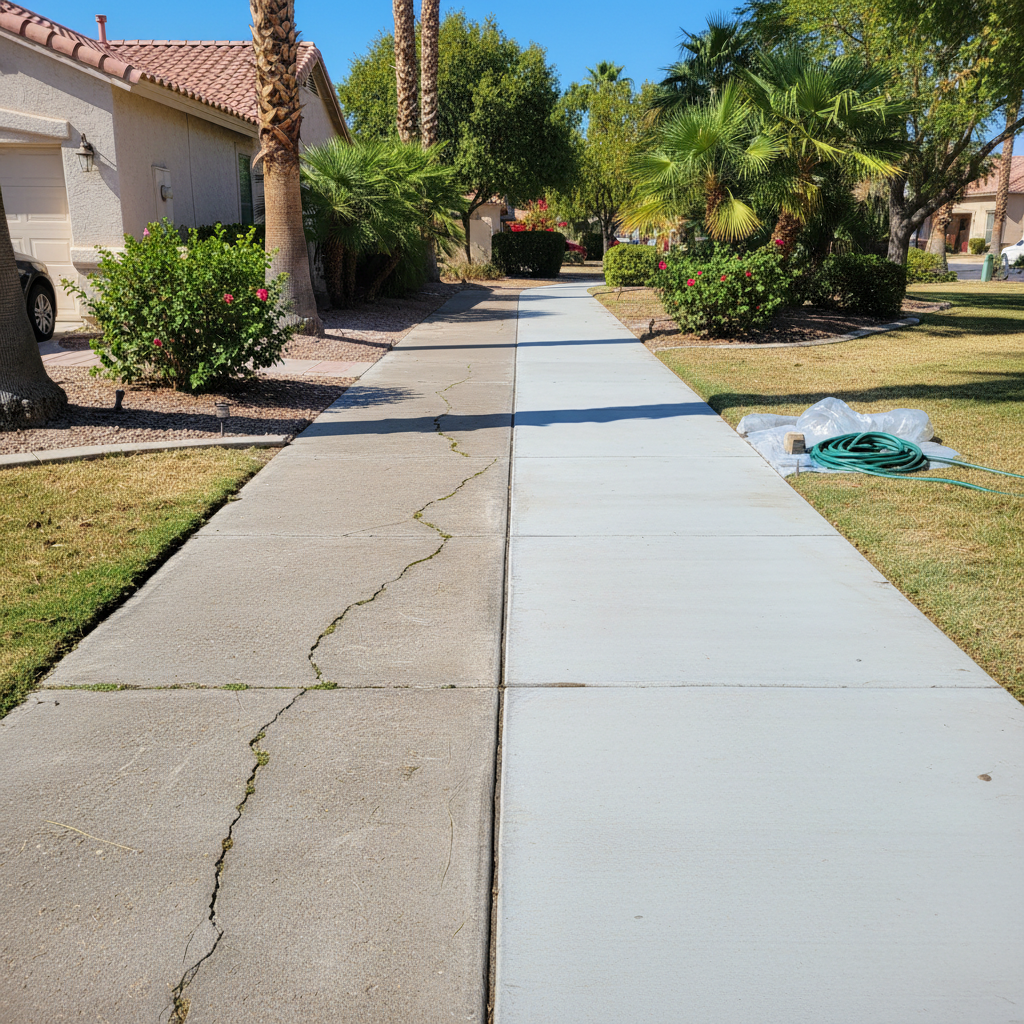
So, you're looking to put in a new sidewalk, or maybe replace an old cracked one, around your Glendale home. Good move. A solid, good-looking sidewalk doesn't just make your place safer, it really boosts curb appeal. But when it comes down to it, you're probably wondering: should I go with classic poured concrete, or are those fancy concrete pavers worth it?
I've been pouring and laying concrete around here for a long time, and I've seen both approaches in action. Let's talk about what you need to know, straight up, so you can make the best choice for your property.
Poured Concrete: The Tried and True
This is probably what first comes to mind when you think 'sidewalk.' It's a slab of concrete, poured right there on site, smoothed out, and then cut with control joints to manage cracking. It's the standard for a reason.
- Cost: Generally, poured concrete is your most budget-friendly option upfront. Less labor, less material complexity. You're paying for the concrete, the prep work, and the finishing. For a typical residential sidewalk, it's hard to beat the initial price.
- Durability: A well-poured concrete sidewalk, done right with proper rebar or mesh and a good base, is incredibly strong. It can handle heavy foot traffic, even light vehicle traffic if it's thick enough. The big thing to watch out for in Glendale is our expansive clay soils. If the ground underneath isn't prepped correctly, those shifting soils can cause serious cracking over time. That's why proper sub-base compaction is crucial.
- Maintenance: Pretty low maintenance. You'll want to seal it every few years to protect it from our intense sun and any spills. If it cracks, though, repairing it can be tricky. You're usually looking at patching, which never quite matches, or tearing out and replacing sections.
- Appearance: It's classic, clean, and you can get it in various finishes – smooth, brushed, exposed aggregate. You can also get it colored, which adds a nice touch. It's a uniform look, which some folks prefer.
Concrete Pavers: The Flexible Alternative
Pavers are individual concrete units, kind of like bricks, that are laid over a prepared base of gravel and sand. They interlock, which gives them a lot of flexibility.
- Cost: This is where pavers usually cost more, sometimes significantly more, than poured concrete. You're paying for the individual units, which are more expensive per square foot, and the labor to lay each one by hand. The base prep is also a bit more involved to ensure proper drainage and stability for the individual units.
- Durability: Pavers are tough. Really tough. Because they're individual units and not one solid slab, they can flex and move a bit with our shifting Glendale soils without cracking. If one gets damaged, you can usually just pop it out and replace it. That's a huge advantage in our climate. They also stand up great to our intense UV rays.
- Maintenance: Similar to poured concrete, you'll want to seal them to protect the color and prevent weeds from growing in the joints. The joints themselves are filled with sand, which can wash out over time and need topping up. If you get a stain, you can often just replace the affected paver.
- Appearance: This is where pavers really shine for a lot of homeowners. You've got a huge range of colors, shapes, and patterns to choose from. You can create some really custom, high-end looks that just aren't possible with a single poured slab. Think of it like a puzzle for your sidewalk.
So, What's My Recommendation for Glendale?
Look, for sheer upfront affordability and a clean, traditional look, you can't go wrong with a properly installed poured concrete sidewalk. If you're on a tighter budget and just need a functional path, Kingdom Concrete Glendale can get you a great concrete sidewalk that'll last.
However, if your budget allows, I'm leaning toward concrete pavers for most residential sidewalks in Glendale, AZ.
Here's why: Our soil conditions here, especially in older neighborhoods like around the Catlin Court Historic District where the ground has settled and shifted over decades, can be a real challenge for rigid concrete slabs. Those expansion and contraction cycles, combined with our intense heat and occasional monsoon downpours, put a lot of stress on concrete.
Pavers, with their interlocking design, handle that movement much better. You're less likely to see major cracking or heaving. And if you do, repairing a paver sidewalk is usually a lot simpler and less noticeable than trying to patch a cracked concrete slab. Plus, the aesthetic versatility of pavers can really elevate your home's exterior.
Ultimately, both are solid choices when installed correctly. It really comes down to your priorities for cost, long-term durability in our unique climate, and the look you're going for. Give us a call at Kingdom Concrete Glendale, and we can come out, take a look at your specific situation, and help you figure out the best path forward.